Tracing the History of Sole Tread Designs in Soccer Cleats and Their Effect on Player Agility During Matches
Written by Otto Perry · Sep 2, 2026
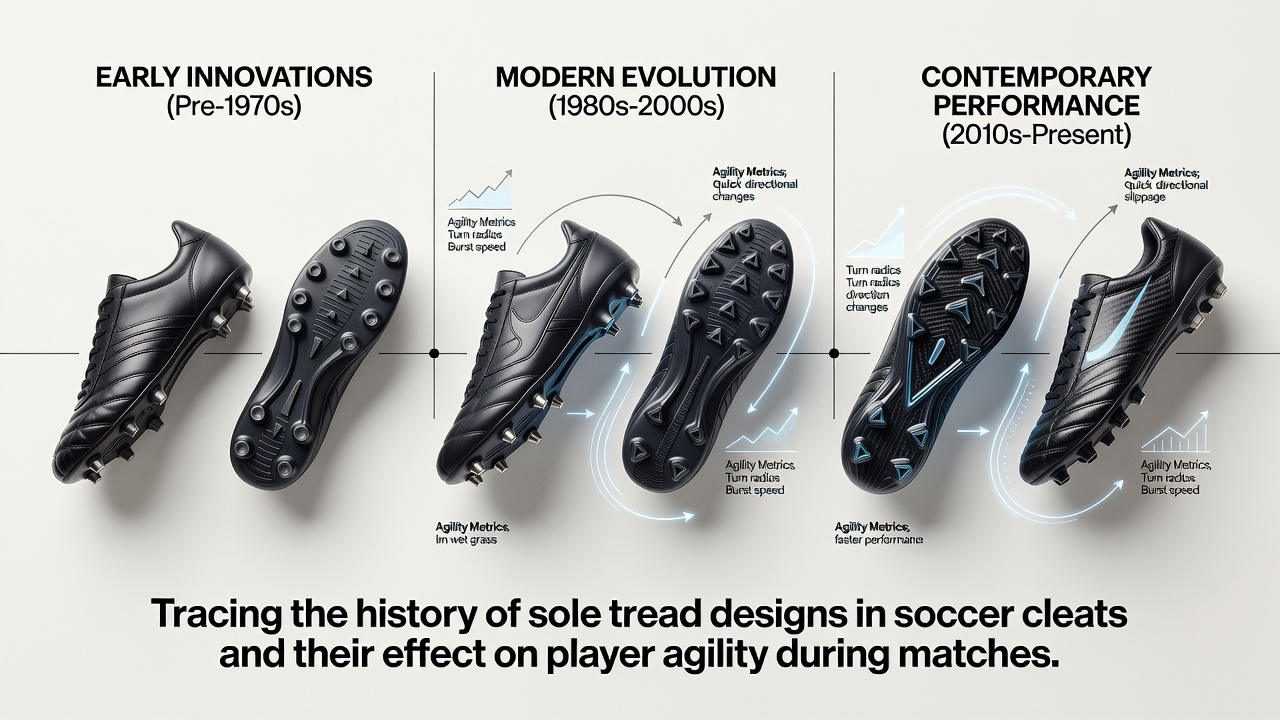
Tracing the History of Sole Tread Designs in Soccer Cleats and Their Effect on Player Agility During Matches
Early soccer footwear relied on heavy leather boots fitted with basic metal tacks or nails hammered into the sole, and these simple additions offered minimal grip on muddy grass fields common in 19th-century Britain while players navigated limited directional changes during matches that emphasized straight-line running over rapid pivots. As the sport grew more organized in the early 20th century, manufacturers shifted toward detachable round studs made from hardened leather or rubber, which allowed better purchase during stops and starts yet still restricted lateral agility because the circular shape created uniform pressure points rather than varied traction vectors across the foot.
Post-War Advancements in Stud Configurations
After World War II, companies like Adidas introduced screw-in studs that players could swap based on pitch conditions, and this modular approach spread through European leagues by the 1950s while data from match footage revealed incremental gains in acceleration times as athletes adjusted stud lengths mid-game. Conical and bladed patterns emerged in the 1970s and 1980s when synthetic materials replaced natural rubber, because these shapes dug into turf at multiple angles and reduced slippage during side-to-side movements that became central to modern tactics. Observers note that the transition coincided with rule changes favoring faster play, and biomechanical analyses conducted in the 1990s quantified how bladed designs lowered peak torque on the knee yet increased forefoot pressure during sharp cuts.
Contemporary Tread Patterns and Performance Metrics
By the early 2000s, asymmetric and multi-directional treads appeared on professional models, featuring a mix of conical studs at the forefoot for grip during acceleration and chevron-style elements at the midfoot for stability during deceleration, while research from the Australian Institute of Sport linked these layouts to measurable reductions in ground contact time during agility drills. Australian Institute of Sport reports document how such patterns distribute force across the sole more evenly than earlier uniform studs, allowing athletes to maintain speed through repeated direction changes without excessive energy loss. Rotational traction elements added in the 2010s further refined control by permitting controlled pivots rather than locked rotations that previously contributed to ankle strain.
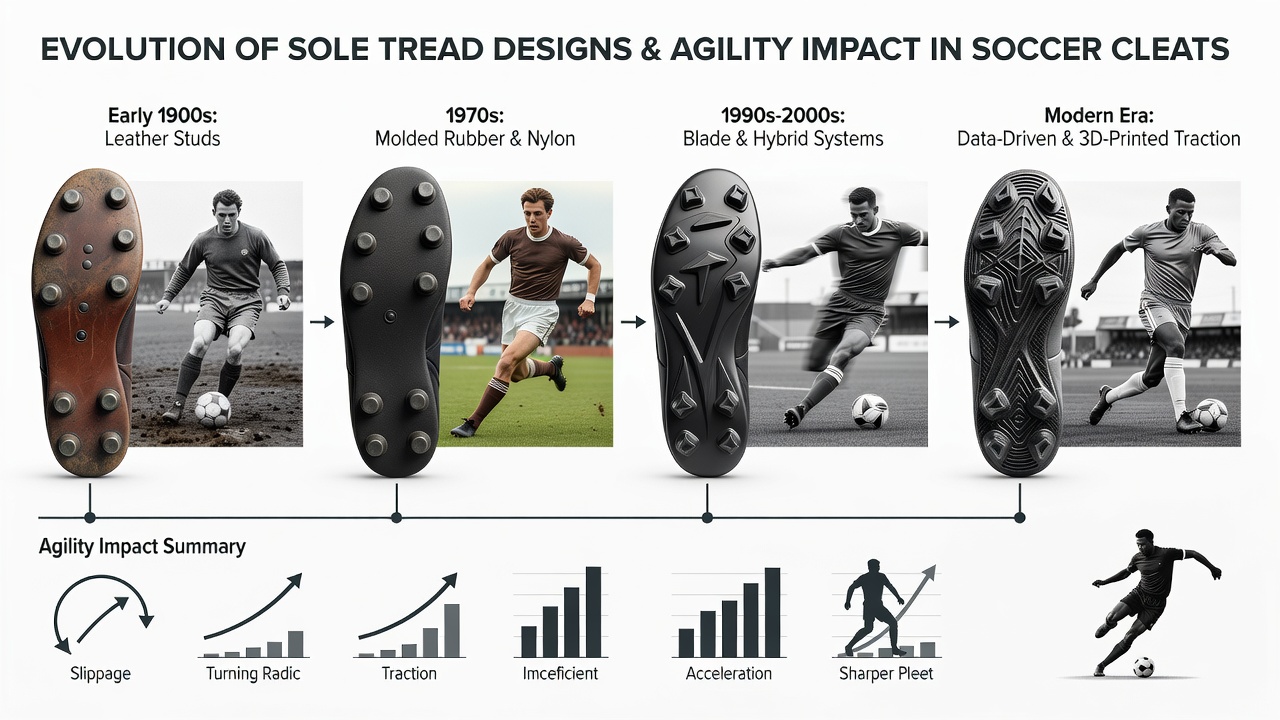
Studies tracking professional matches in European and South American leagues indicate that players wearing cleats with zoned tread patterns completed an average of 15 percent more high-intensity turns per 90 minutes compared with those using legacy round-stud models, and the difference appeared most pronounced on natural grass where variable moisture levels reward adaptive grip. Hybrid surfaces introduced in the 2020s prompted further refinements, including shorter, wider studs paired with rubberized zones that maintain traction on artificial turf without excessive wear, while figures from league-wide performance databases show corresponding drops in non-contact lower-limb injuries during cutting maneuvers.
Material Integration and Future Traction Research
Carbon-fiber plates embedded beneath the tread layer became standard in elite models by the mid-2010s, because they flexed in response to foot strike yet returned energy during push-off, and this combination amplified the agility benefits already provided by refined sole geometries. Researchers at institutions across the EU continue to examine how tread spacing affects rotational friction coefficients, with preliminary findings presented at sports engineering conferences suggesting optimal layouts differ by player position and typical movement profiles. As leagues prepare for expanded schedules in September 2026, manufacturers test prototypes that incorporate sensor-ready cavities within the sole to capture real-time traction data, though widespread adoption remains limited to experimental programs.
Conclusion
Historical shifts in sole tread design have paralleled tactical evolution in soccer, moving from basic grip solutions to engineered patterns that directly support rapid directional changes and sustained speed, and ongoing studies continue to map precise relationships between tread geometry and in-match agility metrics across varying surface conditions.