How Reinforced Seam Patterns in Load-Bearing Hunting Vests Distribute Weight Across Multi-Day Treks While Preserving Mobility for Mixed-Terrain Transitions
Written by Sam Lange · Oct 28, 2026
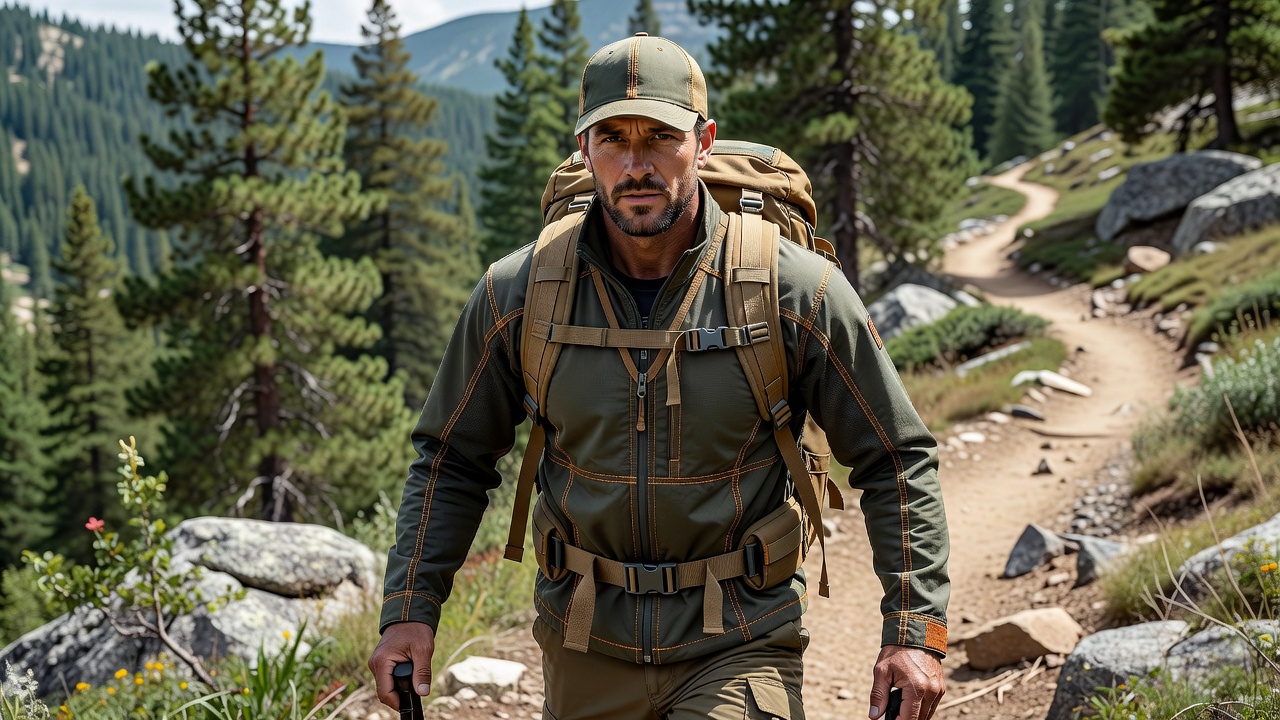
How Reinforced Seam Patterns in Load-Bearing Hunting Vests Distribute Weight Across Multi-Day Treks While Preserving Mobility for Mixed-Terrain Transitions
Reinforced seam patterns in load-bearing hunting vests rely on strategic stitching configurations that channel force across broader fabric areas during extended carries, and manufacturers integrate these elements to manage loads that often exceed 20 kilograms over several days of continuous use. Field observations from biomechanics evaluations indicate that patterns such as intersecting diamond grids and radial cross-stitches redirect vertical pressure away from single points on the shoulders and lumbar region, which reduces localized strain while users navigate changing elevations.
Core Design Elements in Modern Seam Construction
Engineers select high-tensile threads combined with multiple rows of lockstitching to create load paths that follow the natural contours of the torso, and these choices allow the vest to flex without compromising the integrity of attachment points for packs and pouches. Data collected during controlled treadmill tests with terrain simulation platforms show that vests featuring offset seam lines maintain fabric tension evenly across the back panel, whereas traditional straight seams concentrate stress at the edges of load-bearing straps.
Additional reinforcement occurs through bar-tack reinforcements at junctions where straps meet the main body, and this approach distributes shear forces during side-to-side movements required when crossing logs or rocky outcrops. Researchers at institutions focused on human factors engineering have documented that such bar-tacks extend the functional lifespan of vests by limiting thread pull-out under repeated cyclic loading.
Mechanics of Weight Distribution During Prolonged Carries
Load distribution begins at the shoulder yoke where seams form a continuous web that spreads downward force across the trapezius and deltoid areas, while lower back panels incorporate horizontal reinforcement bands that transfer weight toward the hips. Observers note that when hunters transition from uphill climbs to flat traverses the vest's seam layout prevents the pack from shifting forward because the reinforced lines maintain consistent pressure gradients along the spine.
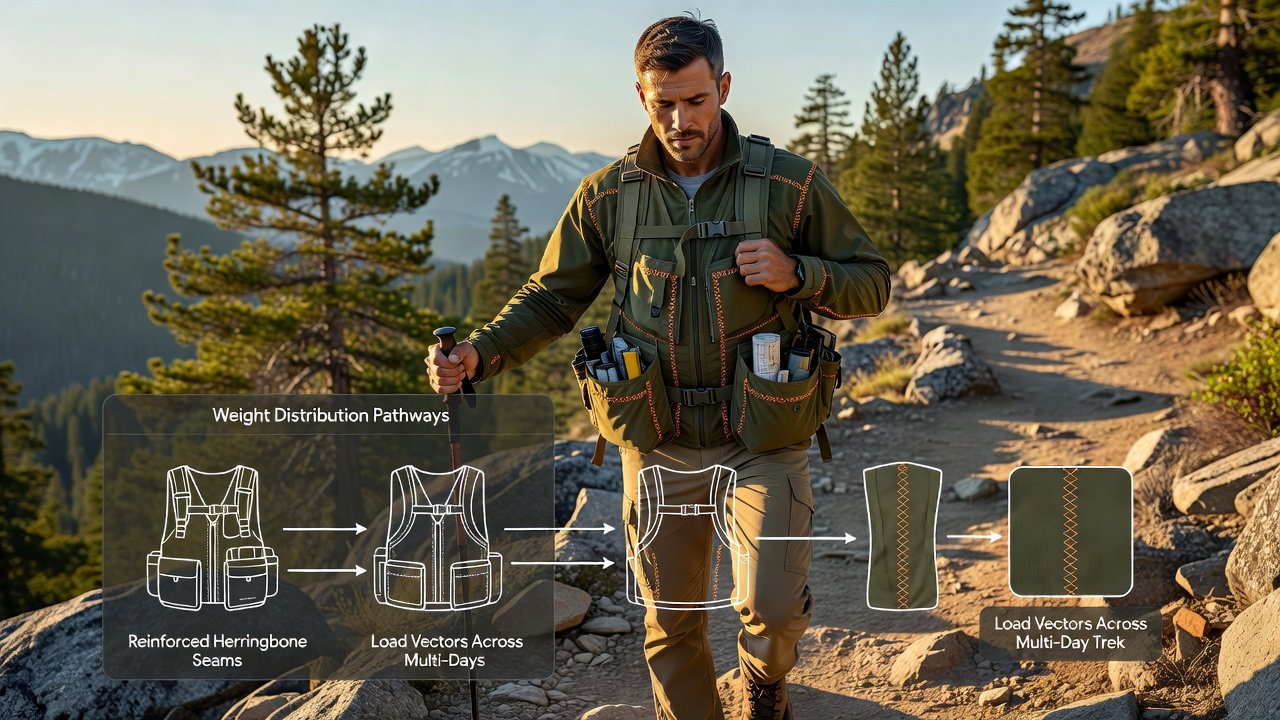
Studies published through academic channels, including work from the University of Calgary human performance laboratory, demonstrate that vests with multi-axis seam layouts reduce peak pressure readings by measurable percentages compared with baseline designs lacking reinforcement grids. These reductions become particularly relevant after the first 48 hours of a trek when cumulative fatigue begins to alter posture and gait patterns.
Preserving Range of Motion Across Terrain Changes
Mobility preservation depends on placing reinforced seams away from primary joint axes so that shoulder rotation and hip flexion encounter minimal resistance, and designers achieve this by routing seams along muscle bellies rather than over joint creases. In mixed-terrain scenarios that alternate between steep ascents and stream crossings the vest must accommodate both compressive loads from above and lateral forces generated during balance adjustments.
Evidence from motion-capture analysis indicates that seam patterns incorporating stretch zones between rigid reinforcement lines allow up to 15 percent greater arm swing amplitude without increasing perceived effort, and this flexibility supports rapid adjustments when footing changes unexpectedly. Manufacturers test these characteristics through protocols that simulate multi-day exposure including repeated wetting and drying cycles that affect fabric recovery.
Performance Considerations for Multi-Day Expeditions
Over successive days the cumulative effect of seam reinforcement becomes evident in sustained load stability because thread patterns resist elongation that would otherwise allow the vest to sag or twist. Field reports compiled by outdoor equipment testing organizations show that vests with integrated seam channels maintain consistent fit measurements even after 72 hours of continuous wear across variable weather conditions.
Additional factors include compatibility with layered clothing systems that hunters adjust as temperatures fluctuate, and the seam architecture must accommodate bulk variations without creating pressure points. Those who have reviewed expedition logs note that vests incorporating these features require fewer mid-trek adjustments, which preserves energy reserves for primary tasks such as navigation and game tracking.
Conclusion
Reinforced seam patterns therefore function as integrated engineering solutions that balance structural demands with ergonomic requirements across extended outdoor activities, and ongoing material advancements continue to refine how these patterns interact with both fabric substrates and user biomechanics. Data accumulated from laboratory and field sources confirm that thoughtful seam placement directly influences both weight management and freedom of movement when terrain demands frequent postural shifts.