Antimicrobial Coatings Transforming Hygiene Standards for Shared Gym Equipment in Community Centers
Written by Otto Perry · Nov 11, 2026
Antimicrobial Coatings Transforming Hygiene Standards for Shared Gym Equipment in Community Centers
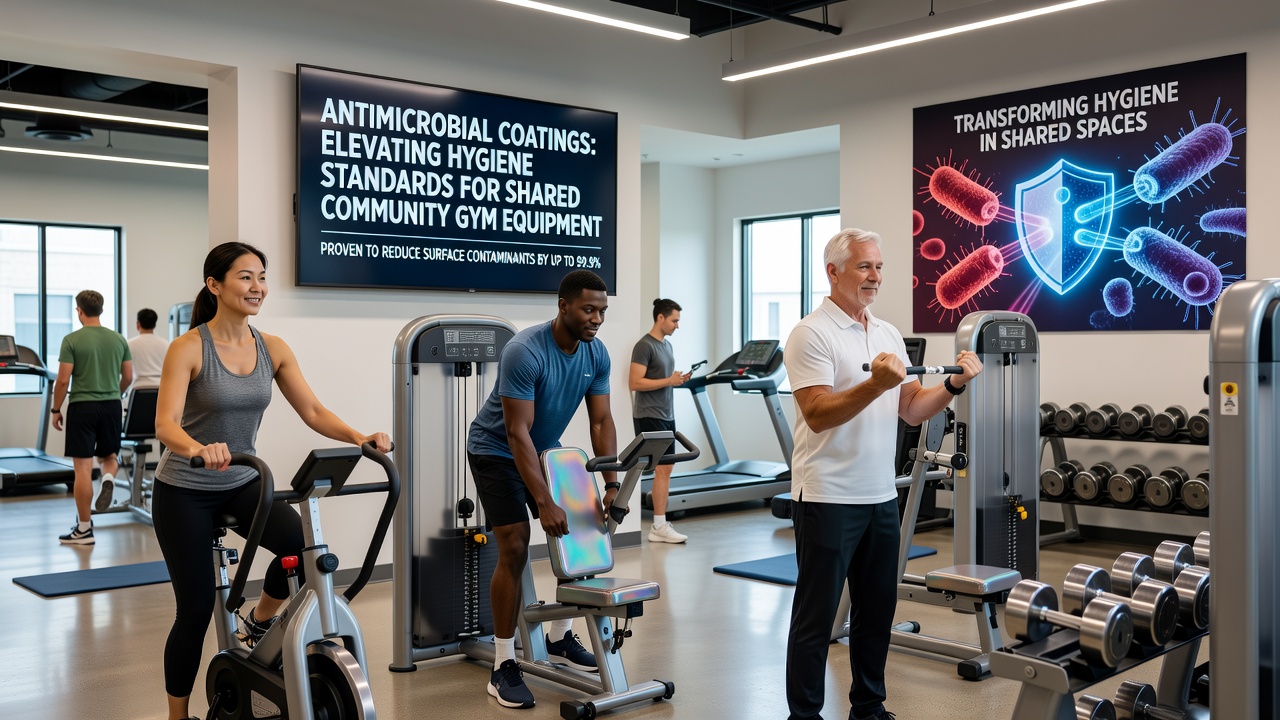
Community centers across urban and suburban areas report rising membership numbers, and shared gym equipment sees constant rotation throughout the day, which creates repeated opportunities for microbial transfer between users. Antimicrobial coatings address this issue by forming a persistent barrier on surfaces such as barbells, cable handles, and exercise mats, and the technology relies on active agents including silver ions, copper compounds, and quaternary ammonium polymers that disrupt bacterial cell membranes upon contact.
How the Coatings Function on High-Touch Surfaces
Manufacturers embed these agents into polymer matrices that bond to metal, plastic, and rubber substrates, and laboratory tests show the treated surfaces reduce viable bacteria counts by more than 99 percent within two hours of exposure. The process does not require repeated reapplication because the embedded compounds remain active through normal cleaning cycles that use standard disinfectants, and this durability matters in facilities where staff perform wipe-downs between classes rather than full sterilization. Researchers at several public health institutions have documented lower surface contamination levels on coated versus uncoated equipment when identical usage patterns and cleaning schedules are maintained.
Implementation Patterns in Community Settings
Facility managers in municipal recreation centers began adopting the coatings after 2023 pilot programs demonstrated measurable reductions in swab-test bacterial loads on coated benches and machine grips. The application process involves surface preparation followed by spray or dip coating, and curing times range from 30 minutes to several hours depending on the formulation. Many centers schedule the work during overnight closures so members encounter minimal disruption, and the same coatings now appear on resistance bands, yoga blocks, and foam rollers that previously lacked any protective treatment.
Documented Effects on Microbial Transfer
Data collected by regional health departments indicate that facilities using coated equipment record fewer member reports of skin irritation or gastrointestinal symptoms commonly associated with shared surfaces. One multi-site study tracked 12 community centers over 18 months and found that the average colony-forming units per square centimeter dropped from 450 to under 50 on high-contact areas after coating installation. These figures align with observations from similar programs in Canadian recreation centers, where public health inspectors noted parallel declines in surface pathogen recovery rates. The coatings complement rather than replace hand hygiene and routine disinfection, because they target residual microbes that survive between cleanings.
Material Compatibility and Maintenance Requirements
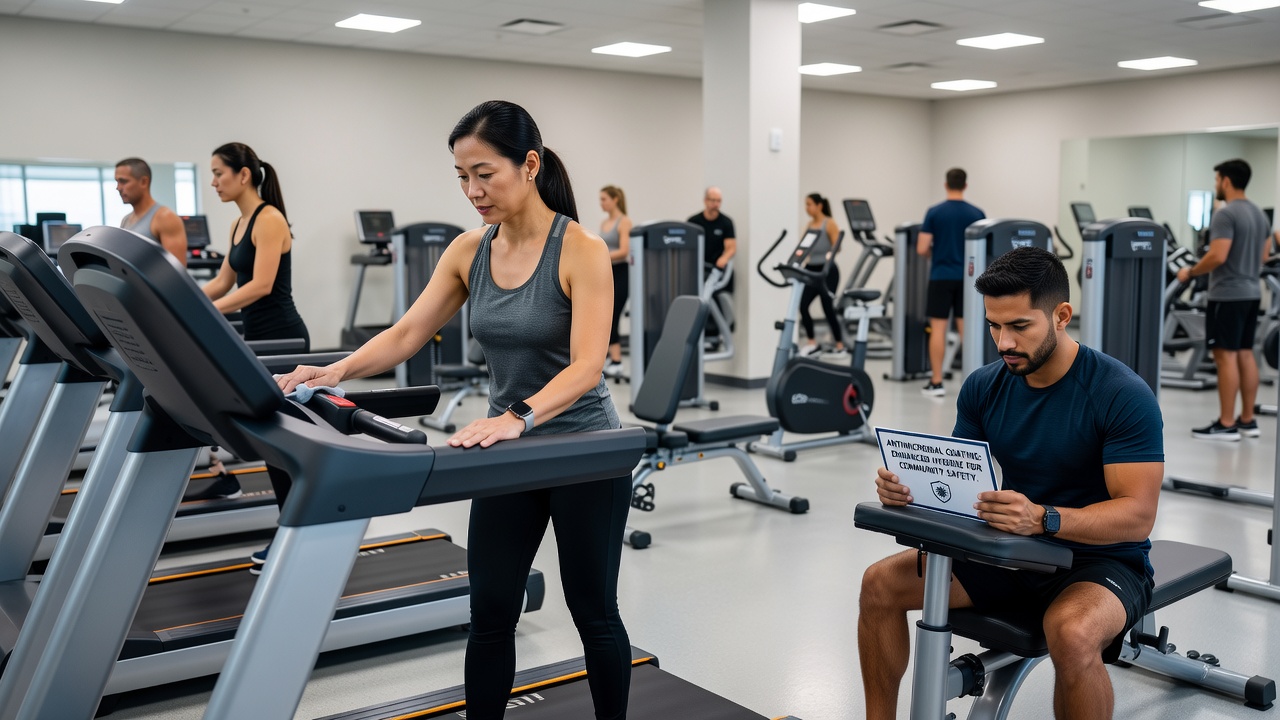
Coatings must adhere to both smooth metal surfaces and textured rubber grips without altering friction or flexibility, and suppliers now offer formulations tested for compatibility with common gym flooring and upholstery. Maintenance staff continue to follow established cleaning protocols because the antimicrobial layer does not eliminate the need to remove organic soil that can shield microbes from the active agents. Facilities that integrated the coatings into their standard equipment replacement cycles report that the added cost per unit averages between 8 and 15 percent, yet the expense is offset by reduced frequency of deep-cleaning interventions during peak seasons.
Regulatory and Certification Landscape
Products sold in the United States carry Environmental Protection Agency registration when they make public-health claims, while European suppliers obtain CE marking under the Biocidal Products Regulation. Centers for Disease Control and Prevention guidelines on environmental infection control recognize treated surfaces as one component of a layered approach rather than a standalone solution. In Australia, the National Health and Medical Research Council has published similar recommendations for recreational facilities that emphasize verification through periodic surface sampling. These frameworks require manufacturers to provide efficacy data under real-world soiling conditions before claims can be advertised.
Observed Trends Through Late 2026
By November 2026 multiple state and provincial recreation associations had incorporated antimicrobial coating specifications into equipment procurement bids, and several large community-center chains began requiring third-party verification of coating performance after the first year of use. Equipment manufacturers responded by offering pre-coated lines that meet these bid requirements, and independent testing laboratories expanded their capacity to handle surface-efficacy assays for fitness products. Observers note that adoption rates vary by region because budget cycles and equipment turnover schedules differ, yet the technology appears in a growing share of new installations.
Conclusion
Antimicrobial coatings supply an additional control measure that addresses persistent microbial presence on shared gym equipment in community centers, and available evidence shows consistent reductions in surface bacterial loads when the products are applied correctly and maintained within established cleaning routines. Public health agencies continue to monitor long-term performance data, while facility operators weigh upfront costs against documented decreases in contamination metrics. The approach integrates into existing hygiene programs without replacing handwashing stations or staff disinfection schedules, and ongoing certification updates ensure that new formulations meet regulatory standards across different jurisdictions.